
What Travelers Are Choosing
Australian travelers aren’t choosing between
Caravan(Holiday) parks and free camping
They’re choosing both.
As travel habits evolve
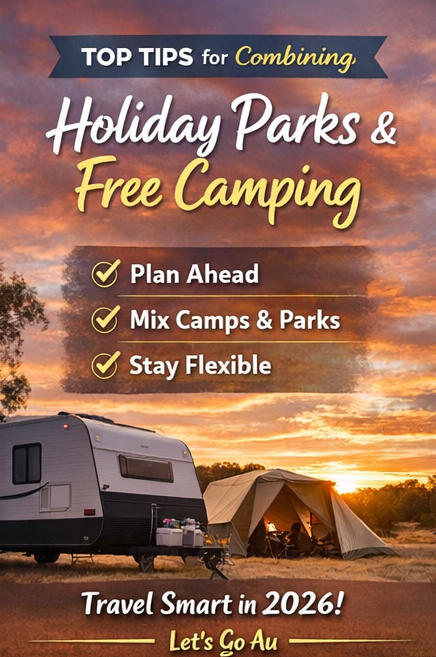
More people are blending paid stays
With low‑cost or free camps to balance comfort,
Cost, and flexibility on the road.
This shift reflects a broader trend
Travelers not only want freedom,
But they also want access to reliable facilities when they need them.
🏕️ Two Different Styles of Travel
Holiday parks and free camping each offer something unique,
and most travelers now switch between them depending on where they are and what they need.
Holiday Parks
Powered sites
Amenities and hot showers
Structured, family‑friendly environments
Free Camping
Un-powered sites
Minimal or no facilities
Often located in remote or nature‑rich areas
Ultimately, the choice often comes down to convenience versus independence.
🏡 Why Holiday Parks Still Matter
Despite the rise of free camping,
Holiday parks remain a cornerstone of Australia’s touring network —
Especially for families, long‑term travelers, and anyone who needs dependable services.
Travelers continue to choose holiday parks because they offer:
Power, water, and clean amenities
Laundry and dump points
Safe, well‑maintained environments
Prime locations near towns and tourist attractions
Along the coast and in popular holiday regions, demand remains high.
In peak seasons, booking ahead is still essential.
🌿 Why Free Camping Is Growing
Free and low‑cost camping has surged in popularity,
Driven by travelers seeking affordability, space, and a closer connection to nature.
Key reasons for the rise include:
Increasing travel and accommodation costs
Growth in self‑sufficient caravans and 4WD setups
More council‑supported and donation‑based camps
A growing appetite for remote and nature‑based travel
For many, free camping makes longer trips possible without relying solely on paid accommodation.
🚐 What Travelers Are Choosing
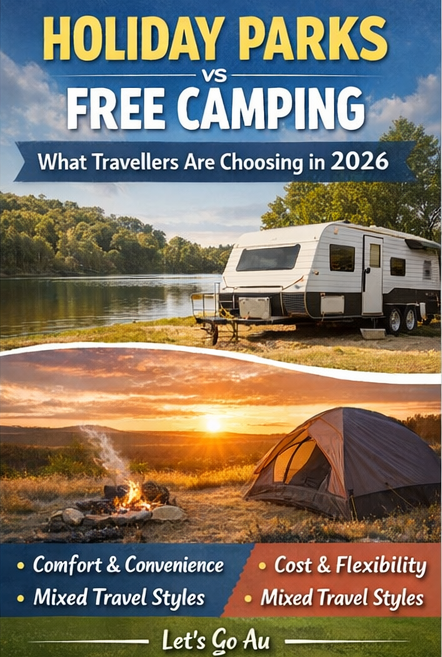
Rather than replacing holiday parks, free camping is becoming part of a mixed travel strategy.
A typical trip now includes:
Free camps between major destinations
Holiday parks every few days for power, showers, and laundry
Routes planned around low‑cost or donation‑based options
This blended approach helps travelers manage costs while still enjoying comfort when they need it.
⚖️ Practical Trade-Offs
Both options come with pros and cons that travelers should consider.
Holiday Parks
Higher nightly costs
Limited availability in peak seasons
Less privacy when parks are full
Free Camping
No guaranteed facilities
Requires self‑contained setups
Time limits or restrictions in some regions
Local council rules vary widely, especially in high‑demand coastal areas.
🧭 What Travelers Should Know Before Choosing
Not all free camps suit caravans — especially large vans
Some regions require full self‑containment
Popular free camps can fill quickly
Holiday parks may still be needed for power, water refills, and maintenance
Even without fixed bookings, planning ahead is still important.
🌏 The Bigger Picture
Australian travel continues to evolve.
Holiday parks remain essential infrastructure, while free camping is becoming a regular part of trip planning for more travelers.
Instead of competing, the two styles now complement each other — supporting longer, more flexible adventures across the country.
As more travelers invest in off‑grid capability, this blended approach is expected to grow even further.